
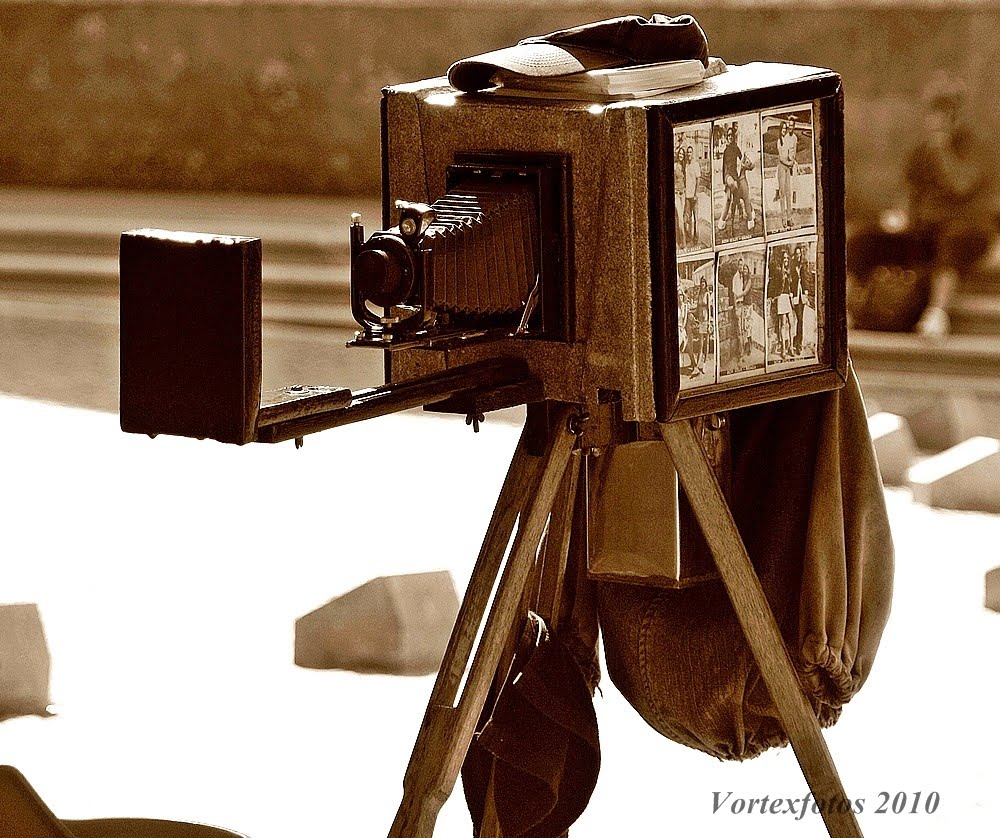
todos os trabalhos sao criaçao do autor ,e nao podem ser reproduzidos ,total ou parcialmente,sem autorizaçao do mesmo
segunda-feira, 21 de fevereiro de 2011
sexta-feira, 18 de fevereiro de 2011
outro dos meus hobbies
para alem da fotografia ,este é outra das minhas ocupaçoes ,nos tempos livres,a carpintaria.


além disso tambem o colecionismo de ferramentas manuais antigas.


quinta-feira, 17 de fevereiro de 2011


recentes aquisiçoes
Starting in 1955, Nihon Kōsokki began making its own Taron line of 35mm rangefinder cameras. It was still based in Tokyo, Omori.[2] The company was renamed K.K. Taron (㈱タロン) after its own products in 1959.[3] The company disappeared in the latter half of the 1960's.

1964) Same body as the Yashica 72-E, the Mimy is a more "automatic" version of the 72-E, with the same 28mm (f2.8) lens. The selenium cell which surrounds the lens (as in the Olympus Pen E series) sets both the correct shutter speed and aperture. Meter readout on teh top now indicates correct exposure instead of EV number. Film counter moved to the top of the camera. Otherwise, the camera has a cold shoe and a PC contact. Apertures can be set manually for flash use or low light situations.. It was designed to produce good-quality pictures in a small, inexpensive package, and it accomplishes this feat quite admirably. As with many Yashica half-frames, the film is inserted upside down, so that the film can be advanced with a quick flick of the left thumb

Canon Rebel T3i / EOS 600D announced and previewed
Monday, 7 February 2011 05:00 GMT
 CP+ 2011: Canon has unveiled the Rebel T3i (EOS 600D) upper entry-level DSLR. It continues to use the 18MP CMOS sensor seen in the Rebel T2i (550D) but gains a tilt and swivel 1,040k dot LCD monitor like the one offered on the more expensive 60D. It also gains the ability to remotely control flashguns using its internal flash, a feature previously only featured on higher-end models. Alongside the camera, Canon is also launching the 18-55mm F3.5-5.6 IS II, a cosmetically revised version of its optically stabilized kit lens. We've had a chance to use pre-production versions of both and have prepared a Hands-On Preview of the EOS 600D including beta samples gallery.

domingo, 13 de fevereiro de 2011


terça-feira, 8 de fevereiro de 2011


segunda-feira, 31 de janeiro de 2011


terça-feira, 25 de janeiro de 2011


segunda-feira, 24 de janeiro de 2011
recentes aquisiçoes
Ross-Ensign's Fulvueflex Synchroflash was a pseudo TLR, made from 1957 to 1959. It followed the line of the Ful-Vue Super, but now sported a plastic (polystyrene[1]) body and lenses, and unlike the 620-film Ful-Vue Super, the Fulvueflex returned to using 120 film. The "Astaross" lens is fixed-focus, with no choice of aperture, and the shutter has a single instantaneous speed and a B setting. The body splits in half diagonally for film loading, released by turning a small metal plate on either side. 

The Contaflex II, introduced the following year, was the same camera with an uncoupled selenium meter added to one side of the front plate.
Both had a fixed lens but to the front of which could be attached a supplementary lens, called the Teleskop 1.7x.


The Contaflex I and II
The Contaflex I, launched in 1953, was equipped with a fixed Zeiss Tessar 45mm f:2.8 lens with front-cell focusing. The very first Contaflex I had a Synchro-Compur shutter with the old scale of shutter speeds (1-2-5-10-20-50-100-250-500), but very soon it adopted the new scale 1-2-4-8-15-30-60-125-250-500.The Contaflex II, introduced the following year, was the same camera with an uncoupled selenium meter added to one side of the front plate.
Both had a fixed lens but to the front of which could be attached a supplementary lens, called the Teleskop 1.7x.

quarta-feira, 19 de janeiro de 2011


sábado, 15 de janeiro de 2011


Subscrever:
Mensagens (Atom)